Fattoush with Sumac Shrimp
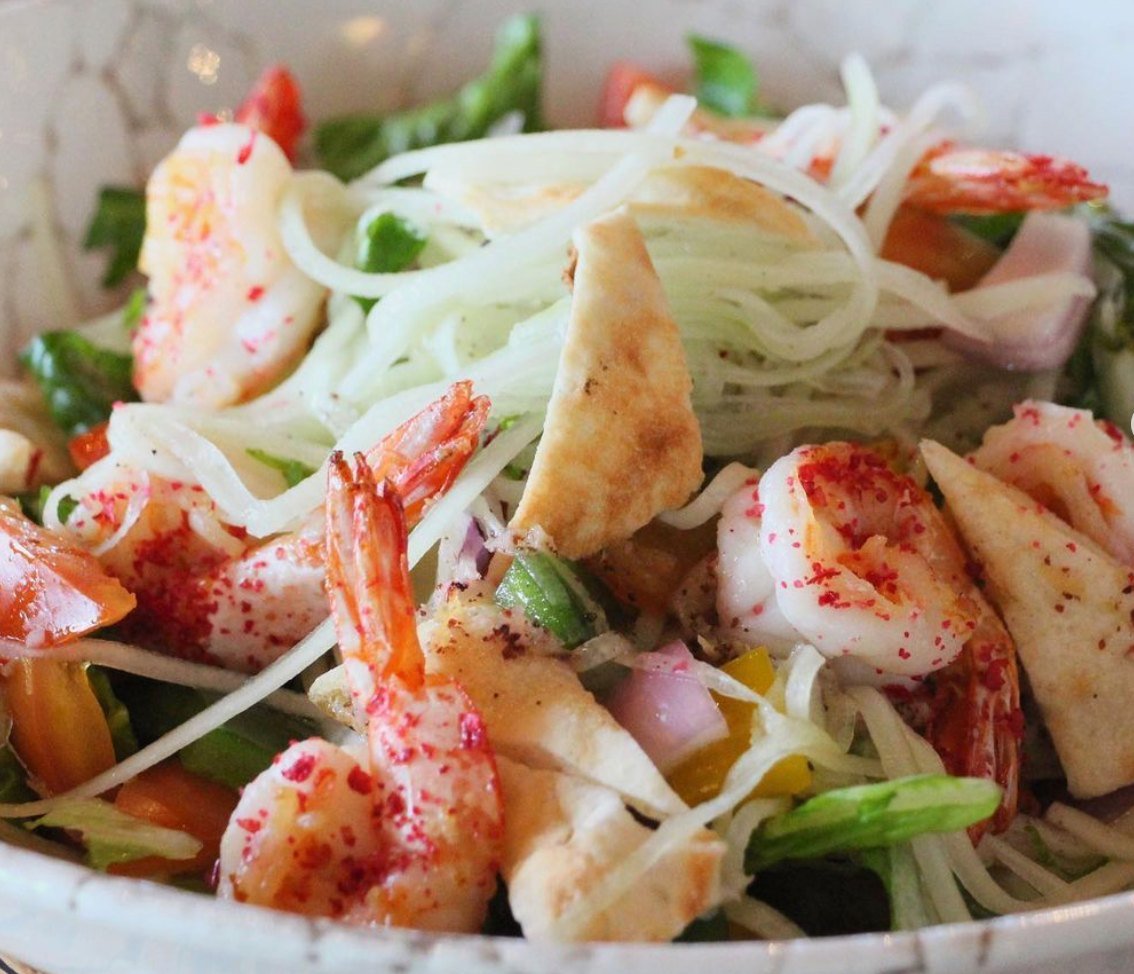
Sumac, lemon and crisp bread
Fattoush is the everyday salad of Lebanon and Syria, and one of the best uses for leftover bread I know. Day-old pita is torn, crisped in the oven and tossed at the last moment with crunchy lettuce, radish, tomato, sweet pepper, red onion and a fistful of herbs. The bread soaks up some of the dressing and stays crisp at the edges, so every forkful has crunch.
What makes it fattoush is sumac. The dried, ground berries of the sumac shrub are deep red and sharply sour, with a fruity, lemony flavor. I use it twice: in the dressing with lemon juice and pomegranate molasses, and dusted over the pita and the finished salad. Everything in the bowl is cheap and available all year, and in the fall and winter a scatter of fresh pomegranate seeds makes it a seasonal plate. For a main course, I top it with shrimp seared hot and fast and dusted with more sumac while they are still sizzling, and a tangle of cucumber cut into long spaghetti strands, cool, crisp and fresh.
Toss the pita in at the very last moment. Half the pleasure of fattoush is bread that is still crisp when it reaches the table.
A salad of broken bread
The name comes from the Arabic fatt, to break or crumble, and fattoush belongs to the family of fatteh dishes across the Levant that are built on broken, toasted or day-old flatbread. It began as a peasant dish, a way for farming families to use up stale khubz with whatever was growing in the garden.
Sumac has been used as a souring agent in the region since long before lemons became common, and it is still the defining spice of the dish. Purslane, a wild green with a lemony crunch, was the traditional leaf and is still used in Lebanon whenever it can be found; romaine has become the everyday substitute.
Step by step
- Crisp the pita.
Torn pita tossed in olive oil and sumac and baked until golden.
- Make the dressing.
Lemon juice, pomegranate molasses, garlic, sumac, dried mint and olive oil.
- Prepare the vegetables.
Cucumber cut into spaghetti; romaine, radish, tomato, pepper, red onion and scallions cut into bite-size pieces.
- Toss with herbs.
Parsley and mint leaves, left whole, tossed through with the dressing.
- Sear the shrimp.
Shrimp seared hot and fast, then dusted with sumac.
- Add the bread and serve.
Crisp pita folded in at the last moment, topped with cucumber spaghetti, sumac shrimp and more sumac.
Rick's rules
Sumac twice. In the dressing for sourness and dusted on top for color and aroma.
Bread in last. Add the pita just before serving so it stays crisp.
Herbs whole, not chopped. Whole parsley and mint leaves keep their color and freshness.
Everything bite-size. Cut the vegetables to roughly the same size as the bread so each forkful has a bit of everything.
Cucumber spaghetti, around the seeds. Cut the strands from the firm outside of the cucumber only. The seedy core makes them watery.
Odd numbers on the plate. Finish each serving with five sumac shrimp and three large shards of pita.
Questions I get asked
What does sumac taste like?
Sharp, tangy and fruity, like lemon without the bitterness. Look for a deep red sumac with a slightly moist texture; dull brown sumac has lost its flavor.
Can I fry the pita instead of baking it?
Yes. Frying in vegetable oil is the traditional Lebanese way and gives a richer crunch. Fry in batches for 1 to 2 minutes, drain and sprinkle with sumac while hot.
What can I use instead of pomegranate molasses?
Mix 1 teaspoon of honey with an extra tablespoon of lemon juice. The flavor is less deep, but the sweet-sour balance is there.
Can I make it ahead?
Make the dressing, crisp the pita and cut the vegetables up to a day ahead. Keep them separate and toss just before serving.
Where do I find sumac?
Middle Eastern grocers sell it cheaply, and most supermarkets now carry it in the spice aisle.
Can I make it without shrimp?
Yes. Fattoush is traditionally a vegetarian salad. Leave out the shrimp for a side dish, or top it with grilled chicken or halloumi instead.
What if I don't have a mandoline?
Use a spiralizer or a julienne peeler, or cut the cucumber into long, thin matchsticks with a knife.
Fattoush Salad with Sumac Shrimp
Method
- Crisp the pita. Heat the oven to 400°F (200°C). Toss the torn pita with the olive oil, sumac and a pinch of salt and spread on a baking sheet. Bake for 8 to 10 minutes, turning once, until golden and crisp. Cool on the tray; it crisps further as it cools.
- Make the dressing. Whisk the lemon juice, pomegranate molasses, garlic, sumac and dried mint with a good pinch of salt. Whisk in the olive oil and season with pepper. Taste: it should be sharp and bright.
- Prepare the vegetables. Cut the cucumber into long spaghetti strands on a Japanese mandoline with a julienne blade, turning the cucumber as you go and working around the seeds; discard the seedy core. Keep the strands chilled. Put the romaine, radishes, tomatoes, pepper, red onion and scallions in a large bowl. Add the parsley and mint leaves, and the purslane if using.
- Dress the salad. Pour over most of the dressing and toss well with your hands so every leaf is coated.
- Sear the shrimp. Pat the shrimp dry and toss with the olive oil and a pinch of salt. Sear in a very hot pan for 1 to 2 minutes a side, until pink and just cooked. Take off the heat and dust at once with the sumac.
- Add the bread and serve. Just before serving, add the crisp pita, keeping some of the largest pieces back, and toss once more. Pile into bowls, drizzle with the remaining dressing and top each serving with a tangle of cucumber spaghetti, five sumac shrimp and three large shards of pita. Scatter with pomegranate seeds and dust with sumac. Serve at once.
Notes
Season: pomegranates are at their best and cheapest from October to January; in summer, use ripe local tomatoes and leave them out.
Make it a meal: the sumac shrimp make it a main course; grilled chicken, halloumi or lamb kofta work too.
Serve with: a chilled Lebanese white, such as Château Ksara Blanc de Blancs, or a glass of mint lemonade.
Tried this recipe?
Tell me how yours turned out, what you changed, or ask me a question. I read every comment.
No comments yet. Be the first to tell me how it went.